
After watching Iron Man, I had dreamed since childhood of building an AI assistant: with Voice Commander I set up voice control on Windows 98 so it would move the mouse and launch programs, but it looked impressive rather than useful. Even speech recognition was a huge challenge back then, and actually holding a conversation was not expected for another hundred years.
Then 2024 arrived.
I matured as a programmer, learned stacks and frameworks, and made my own templates for spinning up any project quickly. That is how I slowly moved toward startups, while doing ordinary client work.
I wrote a ton of code with ChatGPT and realized it could write against my templates. I only had to tell it how everything is built.
It can work with my database. I only have to ask skillfully and give it access.
There is a lot of routine, and GPT looked like the perfect way to finally get rid of it.
First version. This is the core of the app: it takes text input, analyzes the task, asks GPT what else it needs, and writes it. In practice this is the Copilot that is now being added to many IDEs.
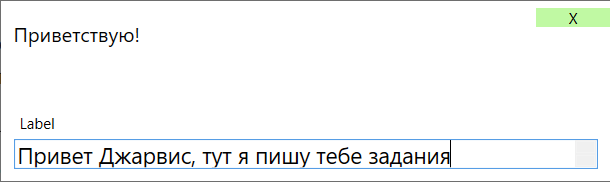
Once the first results were coded, it became clear: I don't have files of code, I have projects. I added project support.
A project is not a single folder. I built a folder scanner and a detector for what kind of thing sits in that folder. At this stage Jarvis got its own project database. For unknown folders it asked what the project was and what it did, and put that into the pre-prompt whenever something needed to be coded, so it knew more about the project.
Database control. I had long wanted it to manage the database from a request of mine, and I did that, adding a check that the code is correct. It can create not just one field, but every table from scratch, and fill them when needed.
Along with that I taught it to ask me questions and feel at home on the computer — it knows the running processes, windows, files, and whatever I am doing right now, so I don't have to explain where to do what.
To make coding more convenient, I asked Jarvis to write me a VS Code plugin that would quietly gather information and hand it back to itself for analysis. And so, knowing nothing about writing plugins, I made one.
Jarvis did it for itself.
And now, besides the input interface, I had a tight integration with the IDE.
It pulled files out of VS Code, detected the running project on its own, extracted table structures, and did a local deploy.
BUT. Sometimes it is unclear exactly what it rewrote. I added Git support so I could see what was new and roll back quickly. Now Jarvis created a separate branch for its own change and committed the successful ones itself.
It was time to get closer to my templates and create what was needed in seconds.
First, installing new projects — I moved all my setup scripts over, rewriting them in C# with Jarvis's help.
I added support for Vue 3 + TypeScript, Yii2, Bash, and so on, but the main piece is my automatic regenerator of models from tables.
Now Jarvis can not only create the database, it sets up the models itself. A huge amount of routine came off my shoulders. I should also have it keep the migrations in line.
Work
Jarvis has already been through several of my projects, and there are fewer and fewer places it has not touched and left its git branch, because it is simply too convenient.
What comes next?
We'll see.